
What not to say to a general contractor
What not to say to a general contractor
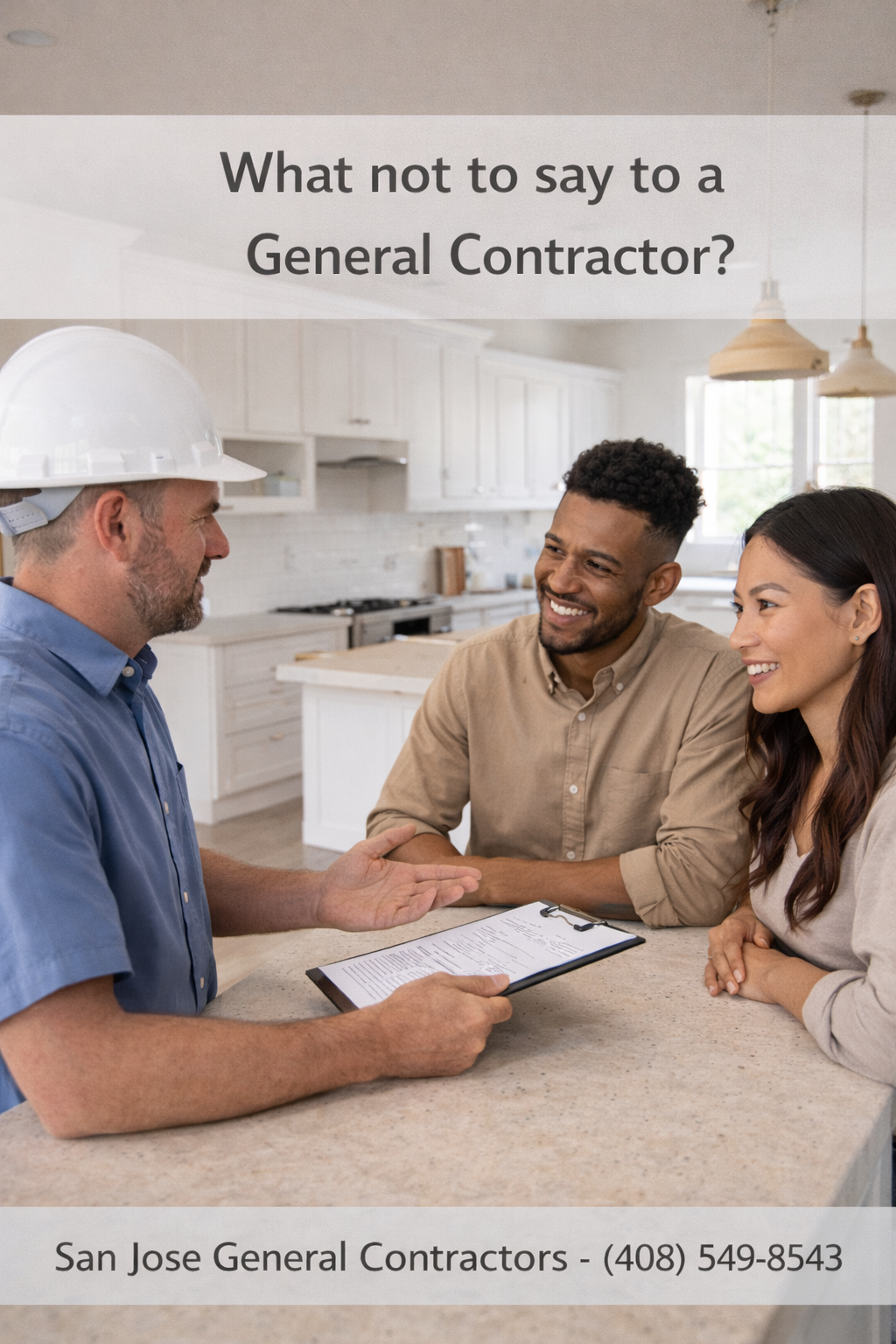
Most homeowners don’t mean to create tension with a general contractor — it usually happens accidentally. Certain phrases raise red flags, slow communication, or signal misunderstandings before a project even begins. Knowing what not to say can make the entire process smoother.
What not to say to a general contractor (quick answer)
You should avoid telling a general contractor that permits aren’t necessary, that quality doesn’t matter, that timelines should be rushed, or that price is the only concern. These statements often signal unrealistic expectations.
Why what you say matters more than you think
General contractors listen closely during early conversations. Not because they’re judging — but because communication sets expectations for the entire project.
Certain phrases suggest budget risk, timeline pressure, or resistance to professional guidance. That doesn’t mean the contractor won’t work with you — but it can change how the project is approached.
Early conversations shape how a contractor plans, prices, and prioritizes your project.
What not to say about price
Avoid statements that reduce a project to “just labor” or imply that quality should be sacrificed for cost.
Avoid saying:
- “It should be cheap — it’s a small job.”
- “Another contractor said they’d do it for way less.”
- “We don’t need it done perfectly.”
These phrases often ignore preparation, coordination, and long-term durability. Contractors hear them as warning signs of future conflict.
What not to say about the process
Avoid dismissing planning, inspections, or professional steps — even if the project seems simple.
Avoid saying:
- “We don’t need permits for this.”
- “We’ll figure it out as we go.”
- “That step seems unnecessary.”
These comments usually signal risk. Planning exists to prevent surprises, delays, and expensive rework later.
What not to say about timelines
Rushing a contractor without understanding dependencies can lead to mistakes or unrealistic expectations.
Avoid saying:
- “Can we skip steps to finish faster?”
- “This shouldn’t take more than a few days.”
- “We need this done by a specific date no matter what.”
Construction timelines depend on inspections, material availability, drying/curing time, and trade coordination — not just effort.
San Jose considerations homeowners often overlook
In San Jose, permits, inspections, and city requirements are often unavoidable — even for projects that seem minor.
Saying “other people didn’t need permits” or “the city won’t notice” puts contractors in an impossible position. Local experience matters more than shortcuts.
What to say instead (and why it helps)
The best conversations focus on goals, constraints, and transparency — not shortcuts or assumptions.
Better alternatives:
- “What does this project realistically involve?”
- “What options do we have within our budget?”
- “What should we prioritize for long-term durability?”
- “What’s a realistic timeline if we do this right?”
These questions invite collaboration instead of conflict. They also help contractors plan accurately.
If you’re exploring a remodel and want to understand how a professionally managed project works, you can learn more here: home remodeling .
FAQ: Talking with a general contractor
Can saying the wrong thing affect my quote?
It can. Red-flag statements may increase contingency, reduce flexibility, or limit availability.
Should I be completely honest about my budget?
Sharing a realistic range helps contractors suggest appropriate options and avoid wasted time.
What’s the best way to start a conversation?
Start by explaining your goals, constraints, and priorities — then ask for professional guidance.